

Pressure riveting is a thermal-free joining process that uses specialized equipment to apply static pressure to press fasteners such as nuts, studs, and screws into prefabricated holes in sheet metal, creating a plastic deformation interlock between the fastener and the sheet metal. Its core features include: static forming with zero thermal damage, smooth and aesthetic surface, high bonding strength, and no welding required.
The entire process involves no high temperature, spatter, or thermal deformation, providing perfect protection for the structure and performance of precision sheet metal components and electronic parts. After pressure riveting, fasteners sit flush with the sheet metal surface with no protrusions or dents, delivering a clean, high-quality appearance ideal for high-end precision assembly. The joint forms a mechanical interlock structure with high tensile and shear strength, excellent resistance to vibration and loosening, and long-term stability. The process is simple and efficient with no post-processing such as grinding or welding, making it highly suitable for large-scale automated production.
In precision assembly applications for new energy vehicles, pressure riveting serves as the precision steward for fastener installation, covering three core fields:
Power battery cover assembly: Battery covers are precision thin-walled aluminum components. Pressure riveting avoids thermal deformation and damage, accurately installing pole nuts and terminal studs to maintain flatness and sealing performance, and preventing thermal stress-induced deformation that could compromise battery safety.
Electronic control unit housing assembly: For precision fastener installation on motor controllers, vehicle controllers, and other electronic control housings, pressure riveting ensures no housing deformation or internal component damage, while maintaining high positional accuracy to meet strict assembly requirements.
Precision sheet metal joining: For fastener installation on body precision sheet metal, battery pack brackets, and lightweight structural parts, pressure riveting replaces traditional welding and drilling with efficient, stable performance, improving assembly accuracy, appearance quality, and service life.
Automated high-efficiency production is the core capability of Eunice’s pressure riveting solution for large-scale new energy manufacturing. The company provides two solutions to meet diverse production needs:
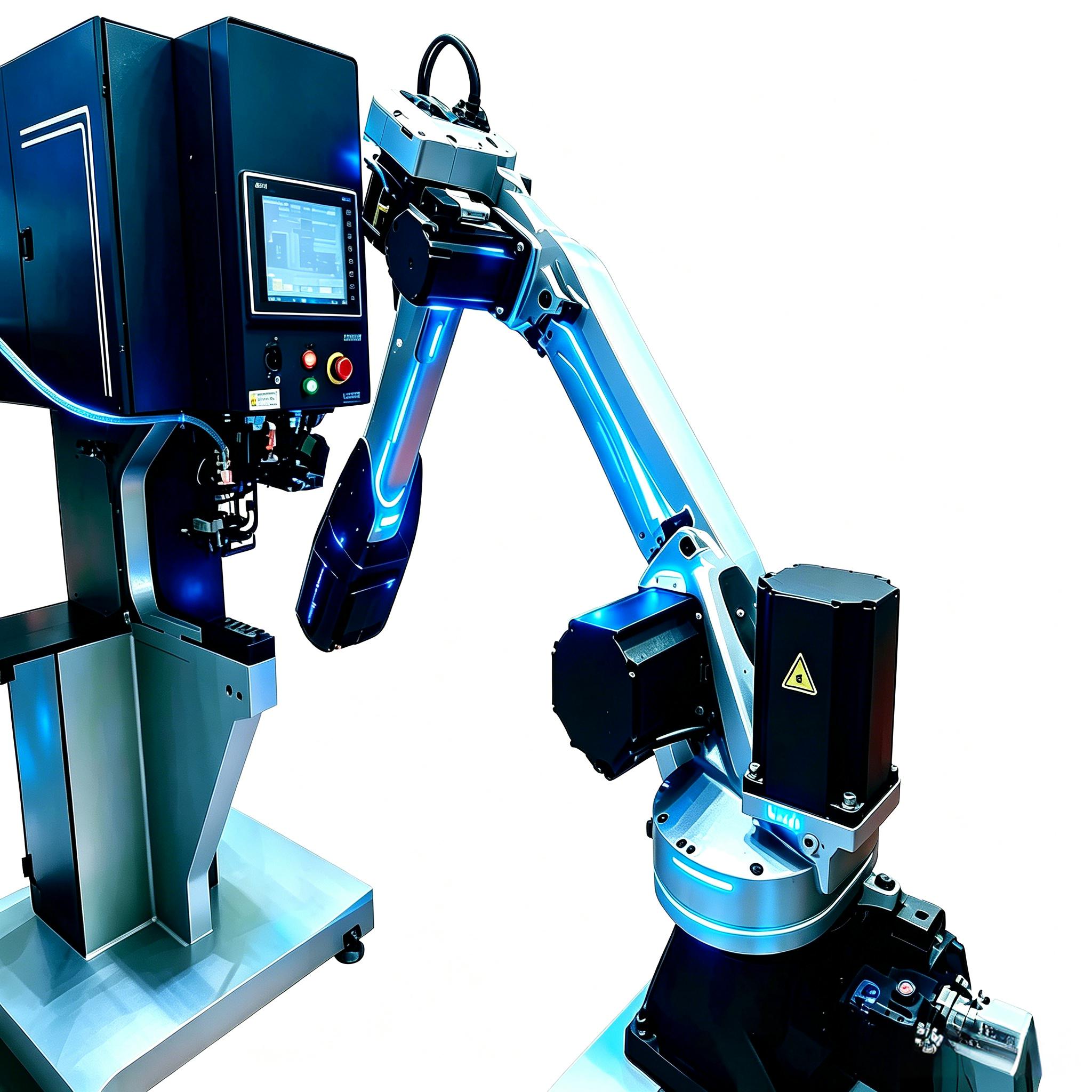
Automatic pressure riveting special machines: Ideal for high-volume installation of standardized fasteners. Integrated with servo pressure control, automatic feeding, and automatic positioning, a single machine processes up to 10,000 fasteners per day with pressure control accuracy of ±0.5%, ensuring every fastener is fully and reliably pressed into place.
Robotic pressure riveting systems: Designed for large-sized, complex precision sheet metal parts. A 6-axis robot equipped with a precision riveting unit and visual positioning system enables flexible pressing and supports rapid product changeover to accommodate multi-specification precision components.
Both solutions integrate pressure-displacement dual closed-loop monitoring, which tracks the pressing process in real time and triggers automatic alarms for anomalies, eliminating assembly failures caused by under-pressure or over-pressure and ensuring consistent product quality.
Eunice has built an industry-leading pressure riveting solution centered on precision control, quality traceability, and cost reduction.
Precision control capability: Based on the company’s mechatronic R&D technology, Eunice has independently developed a servo pressure riveting control system that achieves full closed-loop precision control of pressing force, displacement, and speed. Press-fit depth tolerance is ≤0.02 mm, meeting the strict requirements of new energy precision components.
Quality traceability system: Integrated with digital manufacturing technology, the system collects pressing pressure, displacement, time, and other parameters in real time, binds them to product serial numbers, and generates complete quality data reports to enable full-process traceability and comply with high-standard quality management in the new energy industry.
Cost reduction and efficiency improvement: Automated pressure riveting replaces manual pressing, increasing production efficiency by more than 50% and reducing labor costs by 60%. Assembly pass rate exceeds 99.9%, minimizing scrap loss and helping customers lower long-term production costs while improving productivity.
Static pressing reveals precision; smoothness and stability ensure safety. With zero thermal damage, high precision, and high efficiency, Eunice’s automated pressure riveting process is perfectly suited to the precision fastener installation needs of new energy vehicles. From the precision assembly of power battery covers to damage-free installation on electronic control housings, and from body sheet metal to efficient pressing on battery pack brackets, Eunice ensures assembly accuracy with professional technology, enhances product reliability through strict quality control, and helps customers reduce costs and improve efficiency with automated solutions.
In the future, the company will continue to iterate pressure riveting technology and digital management capabilities, deepen its focus on new energy precision assembly, and provide more precise, intelligent, and efficient pressure riveting solutions for new energy vehicle manufacturing. Every fastener will be firmly and reliably installed, safeguarding the precision quality of new energy vehicles.
Related Posts
- ▶ EUNICE Provides Effective Solutions to Welding Pain Points in New Energy Vehicle Manufacturing
- ▶ EUNICE Robotics AI Intelligent Welding Solution Implemented, Enabling Full‑Process Unmanned Weld Inspection in Vehicle Manufacturing
- ▶ EUNICE Robotics Deepens Its Presence in New Energy Vehicle Welding, Customized Welding Workstations Adapt to Mass Production of Multiple Models
Online Message
Thank you very much for writing to us. Please leave your message and contact information, we will reply to you within 24 hours.