


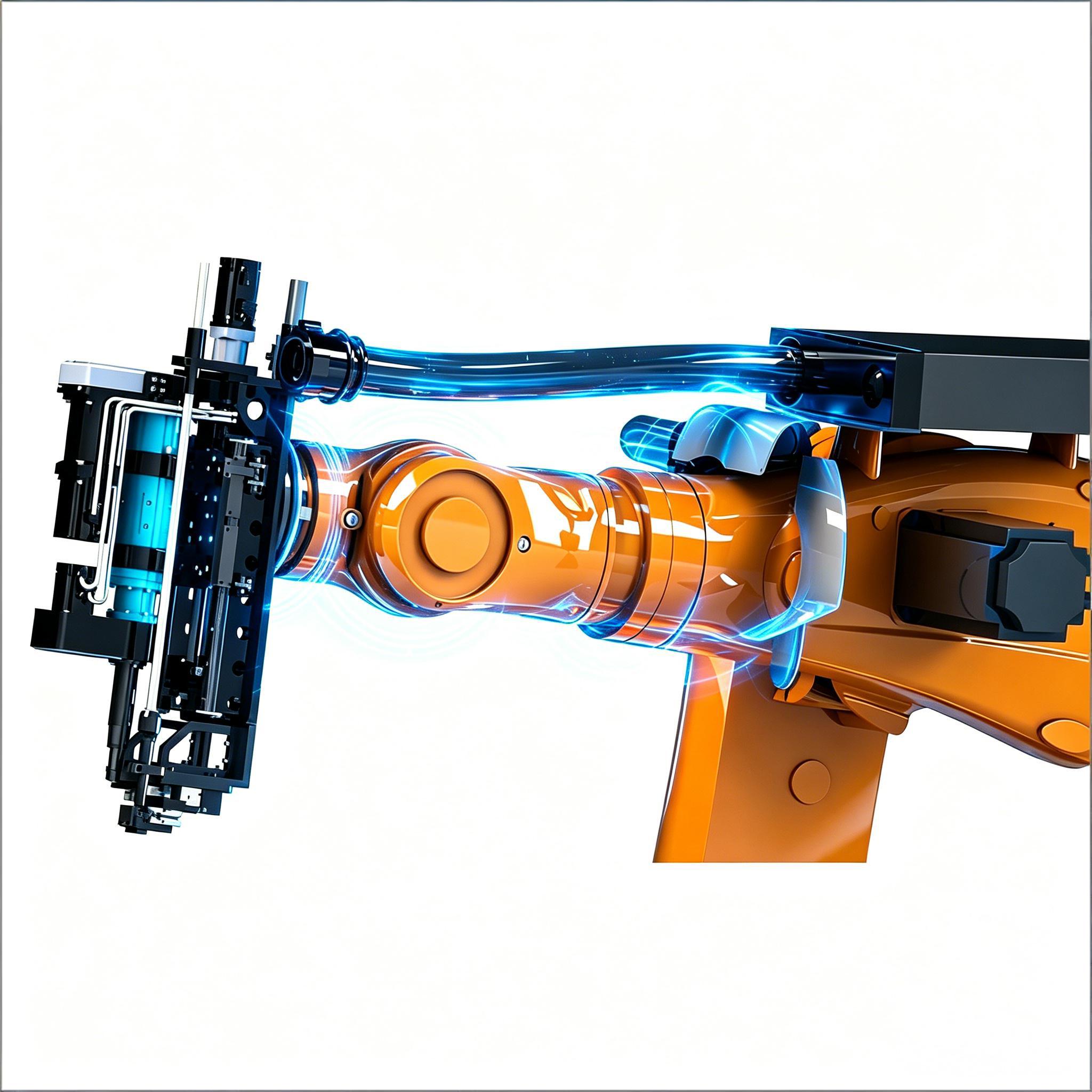
Blind riveting is a mechanical joining process in which a rivet gun pulls the mandrel to expand the rivet body and clamp the workpieces. Its core advantages lie in four aspects: single-sided operation, simplicity and reliability, low cost, and suitability for thin sheets. It requires no double-sided access and can be completed with only one-side contact, making it ideal for enclosed or semi-enclosed spaces such as automotive interiors, battery pack accessories, and wiring harness brackets. The process is simple and can be performed without power or compressed air (easily integrated in automated solutions); it delivers high joint strength with excellent resistance to vibration and loosening. Equipment and consumable costs are low with no post-processing needed, offering exceptional overall cost-effectiveness. It is especially suitable for joining thin sheets, non-metallic materials and shaped parts without causing deformation or damage, making it the ideal process for lightweight thin-sheet assembly in new energy vehicles.
In new energy vehicle manufacturing, blind riveting is the specialist process for interior and accessory assembly, with applications precisely covering three core areas.
Automotive interior assembly: Door trim panels, instrument panel brackets, roof fasteners, seat accessories and other components all use blind riveting. Single-sided operation enables fast assembly without damaging interior appearance, providing firm and non-loosening joints that improve assembly precision and texture.
Battery pack accessory fastening: Internal wiring harness brackets, protective covers and lightweight accessories in battery packs rely on blind riveting. With no heat input and zero deformation, it preserves structural integrity and sealing performance while enabling easy disassembly and maintenance.
Wiring harness and thin-sheet joining: Fastening brackets for chassis and engine compartment harnesses, as well as assembly of body thin-sheet accessories and lightweight trim parts, use blind riveting to replace traditional drilling and welding. It simplifies processes and boosts efficiency.
Flexible automation adaptation is the core competitiveness of Eunice’s blind riveting solution, thoroughly solving the industry pain points of manual riveting. The company’s robotic blind riveting system integrates a 6-axis collaborative robot, an intelligent riveting unit, an automatic rivet feeding system and a visual positioning module to enable flexible production for multi-variety, small-batch scenarios.
Precise visual positioning: The 3D vision system automatically identifies riveting holes, compensates for workpiece deviations with ±0.1 mm positioning accuracy, and eliminates missing or offset rivets.
Automatic feeding and riveting: The integrated feeding system enables automatic rivet delivery, loading, riveting and mandrel collection. Each rivet cycle is ≤ 2 seconds, achieving over 3 times the efficiency of manual work.
Flexible quick changeover: The system stores programs for multiple workpiece types; one-key switching adapts to different vehicle models and components without tool changes, supporting multi-variety collinear production.
Narrow-space compatibility: The lightweight collaborative robot can operate in confined spaces, perfectly solving assembly challenges in interiors, battery packs and other restricted areas.
Guided by the philosophy of rapid deployment, pain point resolution and customer-centric flexibility, Eunice delivers high-value blind riveting solutions.
Rapid deployment: With mature design and system integration capabilities, standardized riveting units can be quickly assembled and commissioned, helping customers launch automated assembly stations in a short time, shorten project cycles and rapidly boost capacity.
Pain point elimination: It completely resolves low efficiency, poor consistency, high labor intensity, missing and misaligned rivets in manual operation. Assembly pass rate exceeds 99.9%, while reducing labor and long-term production costs.
Customer-centric customization: It customizes riveting tools, end effectors and tooling fixtures based on product features and assembly needs, adapting to special-size rivets and shaped parts to meet personalized production requirements and achieve perfect matching between solution and product.
Simple process carries intelligent manufacturing wisdom; tiny joints safeguard vehicle quality. With single-sided operation, high efficiency, flexibility and stability, Eunice’s automated blind riveting solution has become the preferred choice for interior and accessory assembly in new energy vehicles. From refined interior assembly to reliable battery pack fastening, Eunice replaces manual labor with automation, adapts to customer needs with customized solutions, and enhances product competitiveness through quality assurance. In the future, the company will continue to optimize automated blind riveting technology, integrate more intelligent sensing and control systems, and provide more efficient, intelligent and flexible assembly solutions for new energy vehicles. Every joint will be firm and reliable, helping new energy vehicle manufacturing move toward full-process intelligence.
Related Posts
- ▶ EUNICE Provides Effective Solutions to Welding Pain Points in New Energy Vehicle Manufacturing
- ▶ EUNICE Robotics AI Intelligent Welding Solution Implemented, Enabling Full‑Process Unmanned Weld Inspection in Vehicle Manufacturing
- ▶ EUNICE Robotics Deepens Its Presence in New Energy Vehicle Welding, Customized Welding Workstations Adapt to Mass Production of Multiple Models
Online Message
Thank you very much for writing to us. Please leave your message and contact information, we will reply to you within 24 hours.